
Creative Practice, Interrupted
On starting, stopping, and starting again

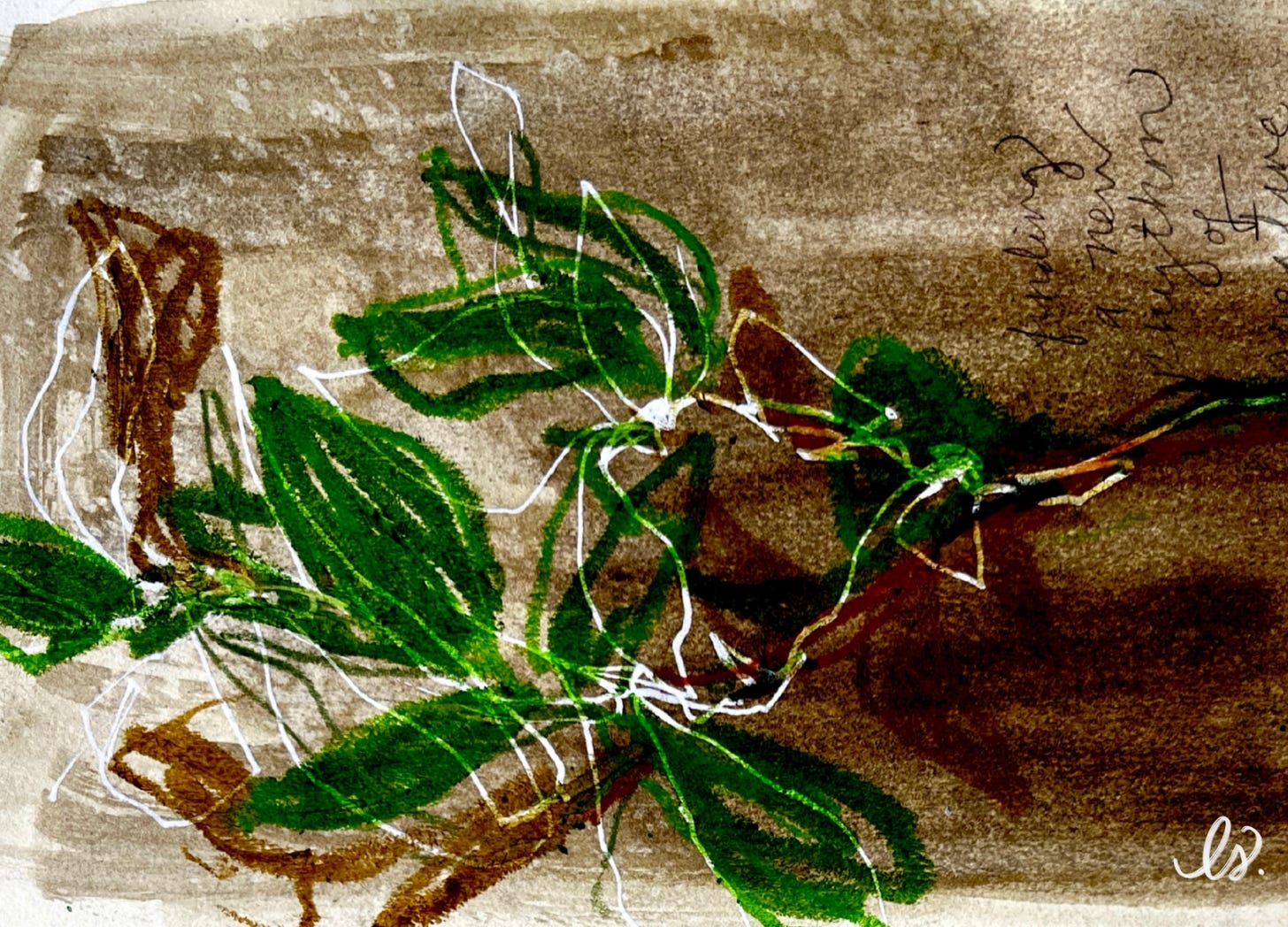
For the first few weeks of the year, I had a daily creative practice.
Then the wheels fell off the bus (Paris apartment–finding drama), and I didn’t open my sketchbook for almost a week.
If you’ve ever had a steady—or steady-ish—creative practice and then life got in the way, it can feel like something has gone wrong:
You’ve fallen behind
You broke the streak
Your creative practice didn’t stick
Interruptions aren’t a failure of creative practice.
What often gets mistaken for failure is actually a mismatch between how creative practice works and how we’ve been taught to measure progress.
The idea that you are falling behind comes from a task-based way of thinking, where success is measured by consistency.
That way of measuring works well for tasks that need to be completed a specific way to maintain sameness. Like a chef training staff to make her recipe the same way every time in a restaurant.
That’s exactly why it works for kitchens, manufacturing, and systems where the output matters more than the person producing it.
Creative practice isn’t about reproducing the same result on demand.
Creative practice is about maintaining a living relationship with your creative process across changing conditions—energy, time, attention, life circumstances.
A creative practice that fits one chapter of your life may not fit the next—and that doesn’t mean it failed, or that you failed.
It can help to think of creative practice as having a rhythm that moves with what’s actually happening in your life.
Consistency treats interruption as failure.
Rhythm treats interruption as information.
Consistency is fragile under changing conditions.
Rhythm is resilient because it anticipates change.
Where consistency breaks, rhythm adapts.
What gets built over time isn’t a perfect habit. It’s a creative practice that can move with you and fit the shape of your days as they are now.
Not because you never miss a day—but because your rhythm has space for pauses, and you know how to return without judgment.
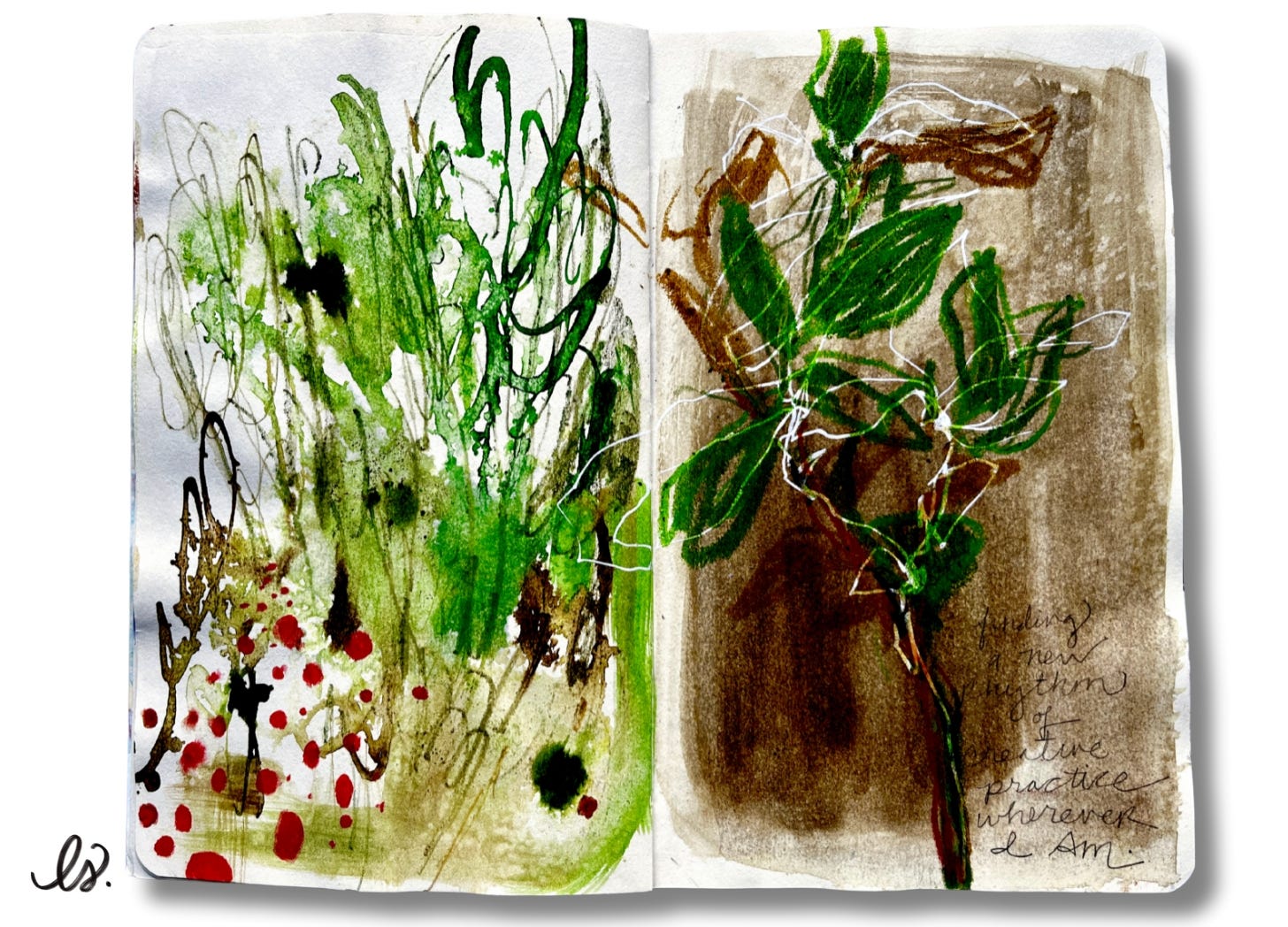
When I opened my sketchbook again after breaking my streak, there was no emotional drama or catching up to do.
The blank page was there waiting, as it always is.
A creative practice lasts not because it is uninterrupted, but because it has a rhythm that responds to the changing conditions of your real life—and can be returned to.
A related creative practice for working with this will be shared with paid subscribers later this week.
I’m curious if this idea of a creative practice rhythm is helpful to you or what it sparks…
This post hit home for me, Lisa…so thank you! I’ve been away from my journaling practice for a long time, and feeling terrible about it, until I’ve recently begun again. Thinking of this pause as part of the larger rhythm of my life helps enormously! Reframing my perspective is so much kinder to myself…. 🙏❤️
As a musician I very much resonate with this shift toward "rhythm." In most of the music I love, changes in the rhythm are not just permitted, they are points of interest, welcome variations, moments of anticipation before the return. This also brings to mind the idea of seasonality in life and allowing for different types of activity as life circumstances change. Seasons are just rhythms too right? Thanks for your thoughtful and helpful ideas.