
How to Start Creating When You Have No Idea What You’re Doing
A simple way to face the blank page and begin anyway

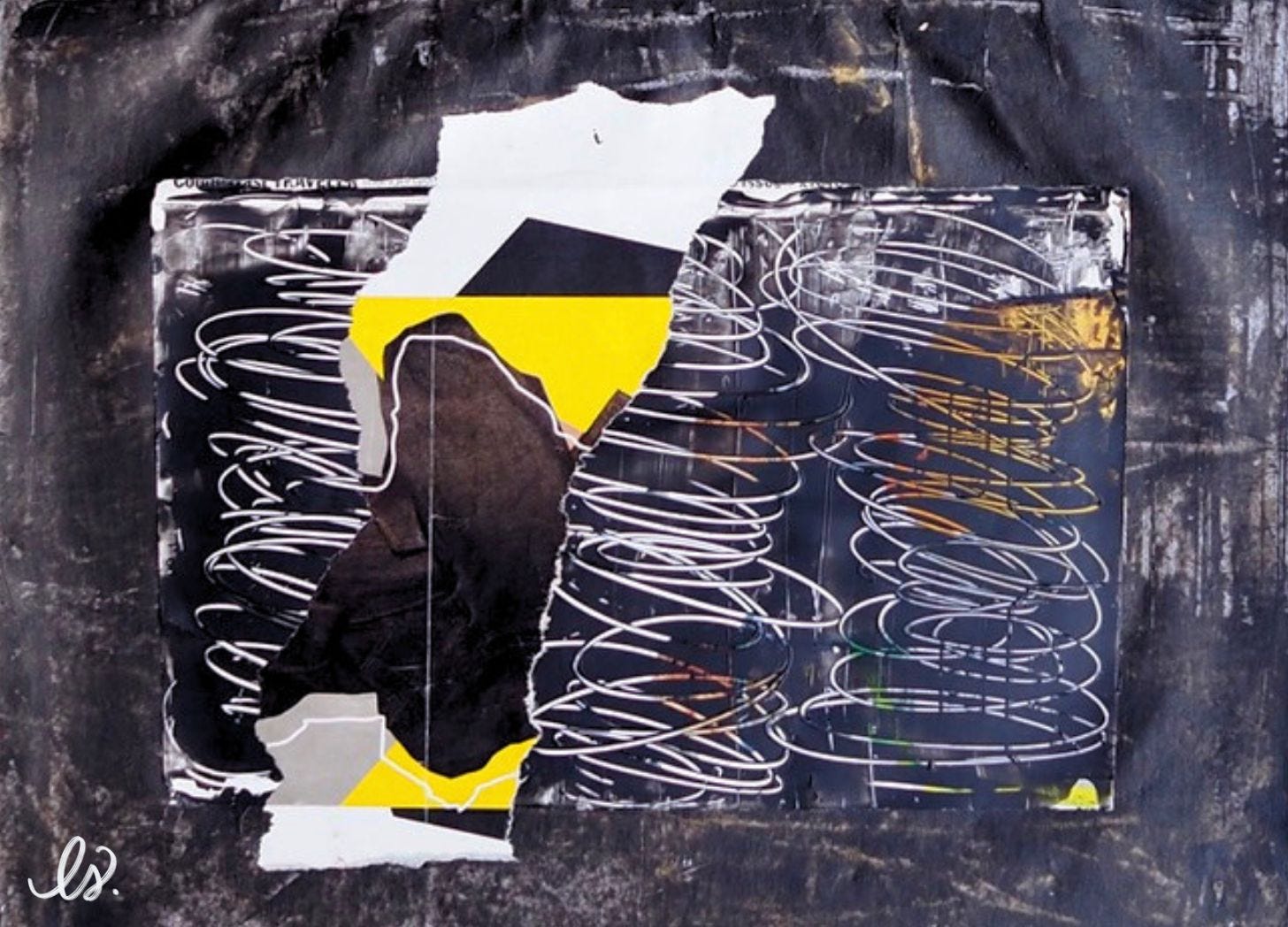
So you’ve gotten inspired to start creating again. Yay!
Maybe you bought a few simple supplies like a notebook, sketchbook, some pretty pens, paint or colored pencils.
But how do you actually begin?
Where to start? Especially if you’re a little bit intimidated by art supplies or have no idea what you’re trying to do.
This moment of wondering can quickly devolve into confusion, and it’s where most people quit before they’ve really started.
Quick note: We’re going to do this in-person together in Italy! You can read all about it and save your spot with that link.

If you’ve got stacks of unused journals or sketchbooks, and art supplies that seem too good to use without a clear purpose, then you know what I’m talking about: blank pages and regrets!
Let’s Use Up Those Art Supplies & Blank Notebooks
If you have no idea what you’re doing, that’s actually fine.
You don’t need an idea to begin. You need a way in.
Here’s an easy way to face the blank page. If you want to look over my shoulder and create along with me, watch the video, below.
Open to a blank page.
Yes, it can feel intimidating. Especially if it’s been a while or you’re putting pressure on yourself to make something meaningful.
So instead of trying to make something, start by making a mark.
Make Some Marks
Use whatever art supplies you have. I keep simple tools within reach on my table like colored pencils and crayons. Kids art supplies work great for this.
Then scribble, make lines, loops, shapes. Whatever feels fun.
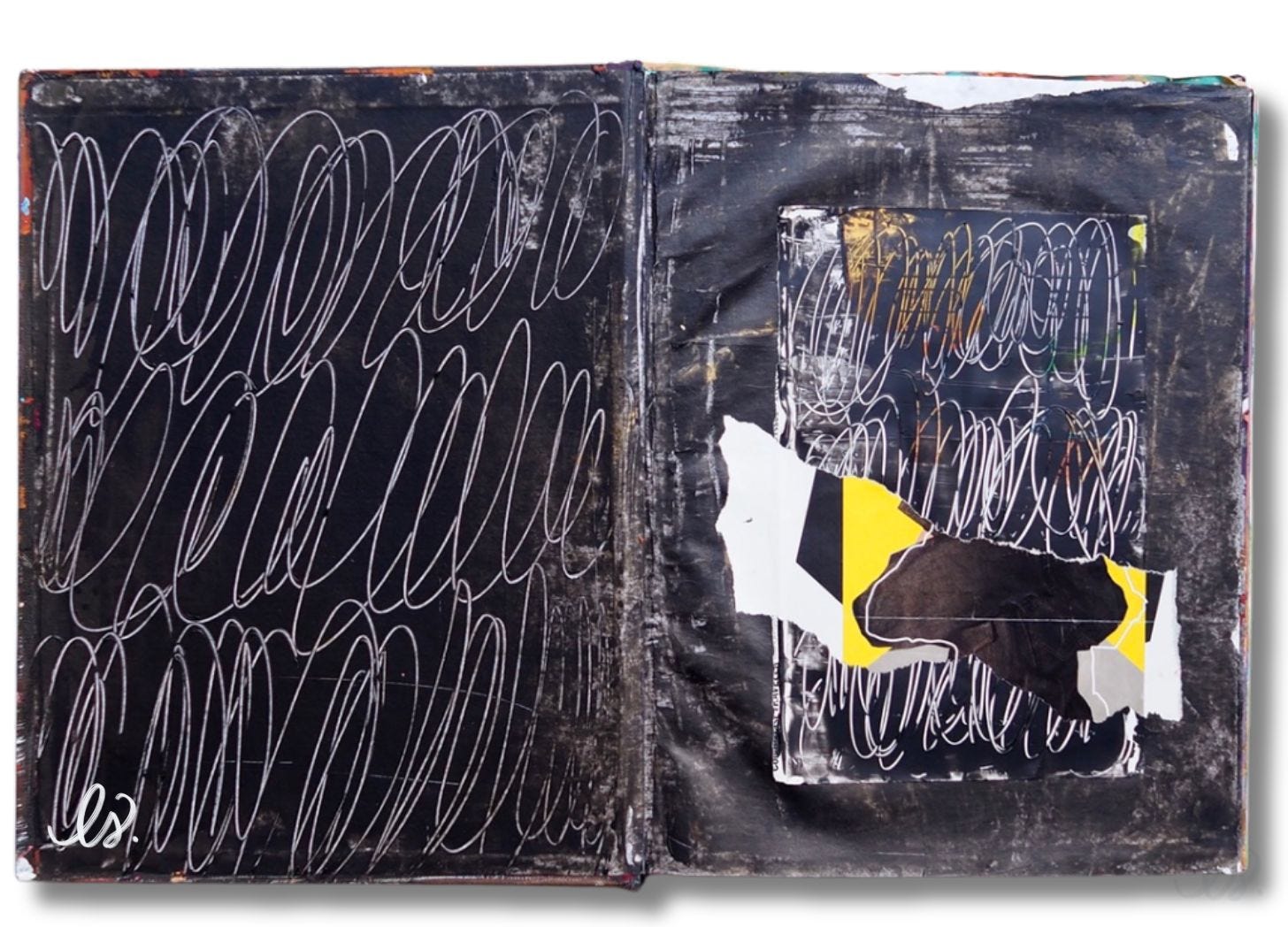
Bask In This Monumental Glory
Very quickly, the blank page is no longer blank.
More importantly, you’ve interrupted the freeze response to the blank page.
Keep Going With Some Paint
Spoiler alert: You don’t have to know HOW to paint in order to do this.
If you want to keep going, add paint. Maybe right on top of the marks you just made. Again, the finger paint or cheap tempera paint that your kids or grandkids play with will do just fine here.
Pour a small amount of acrylic paint directly onto the page. Spread it around with a gift card or any flat edge. Move it across the surface. Let it be uneven, inky or thick.
If there’s extra paint, scrape it onto another page.
Draw Into The Paint
While the paint is still wet, draw into it with any pointy tool: like a barbecue skewer from your kitchen drawer or the end of a paintbrush. Even a pencil will do.
Drag your pencil or pointy tool through the wet paint. Make simple lines. Cross them. Repeat a gesture. Watch how the paint gathers along the edges of the mark.
You are not trying to make an image. You’re moving your hand, using your art supplies. You’re playing.
Let Yourself Play
Play is especially important if you haven’t created in a while, because it interrupts the critical thinking and planning mind — that part of us that thinks we need to know what we’re doing in order to create.
Clarity Follows Creative Action
One of my painting mentors, Bob Burridge, said, “If you have to know what you’re doing, don’t be a painter.”
That simple truth and permission still reverberates in my overthinking brain since I heard him say it almost fifteen years ago.
I used to think I needed clarity on a concept before I could begin. Almost like a guarantee that I’d be creating something worth making.
It was only through trial, error, and about a million false starts before I understood that the act of beginning (again and again) is what gives me clarity.
Everything I write, paint and teach starts with confronting the blank page.
Not because I know what I’m doing, but because I’m willing to start before I do.
For paid subscribers, I’ve included a deeper follow-up creative practice to help you stay with the page long enough for your body — not just your mind — to learn that beginning is safe. This will be posted in a couple of days.
Thank you, Lisa, for sharing the simple yet fun practices of filling the blank page. It is part of my practice to paint with craft paint first thing. I love seeing the color transform and enliven the page. From here, I use it as a jumping-off point for writing, collage, or doodling. I can't stand the brightness of a white page anymore. Color is much more fun! 🥰
your video is fantastic! yes,yes,yes to taking the pressure off results and putting the focus on play ❤️ mark-making as a way to explore our tools is such a great way to jump in